 Available
Foundation Models: Tokens, Attention, And Generation
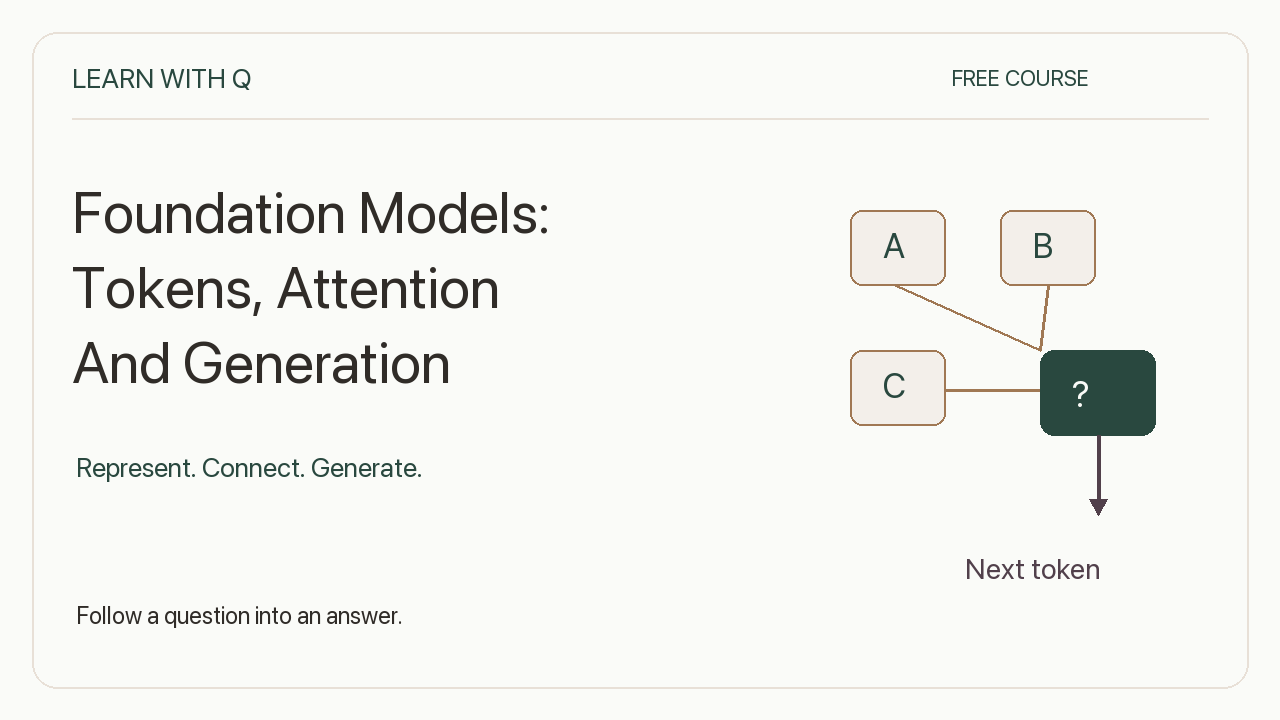
Follow a question through tokens, learned representations, attention and generation. Learn how to compare models and check their answers.
View Course →Understand AI and put it to work. Start with the basics or explore a topic that interests you.
7 courses available 12 learning paths Free to explore
 Available
Follow a question through tokens, learned representations, attention and generation. Learn how to compare models and check their answers.
View Course →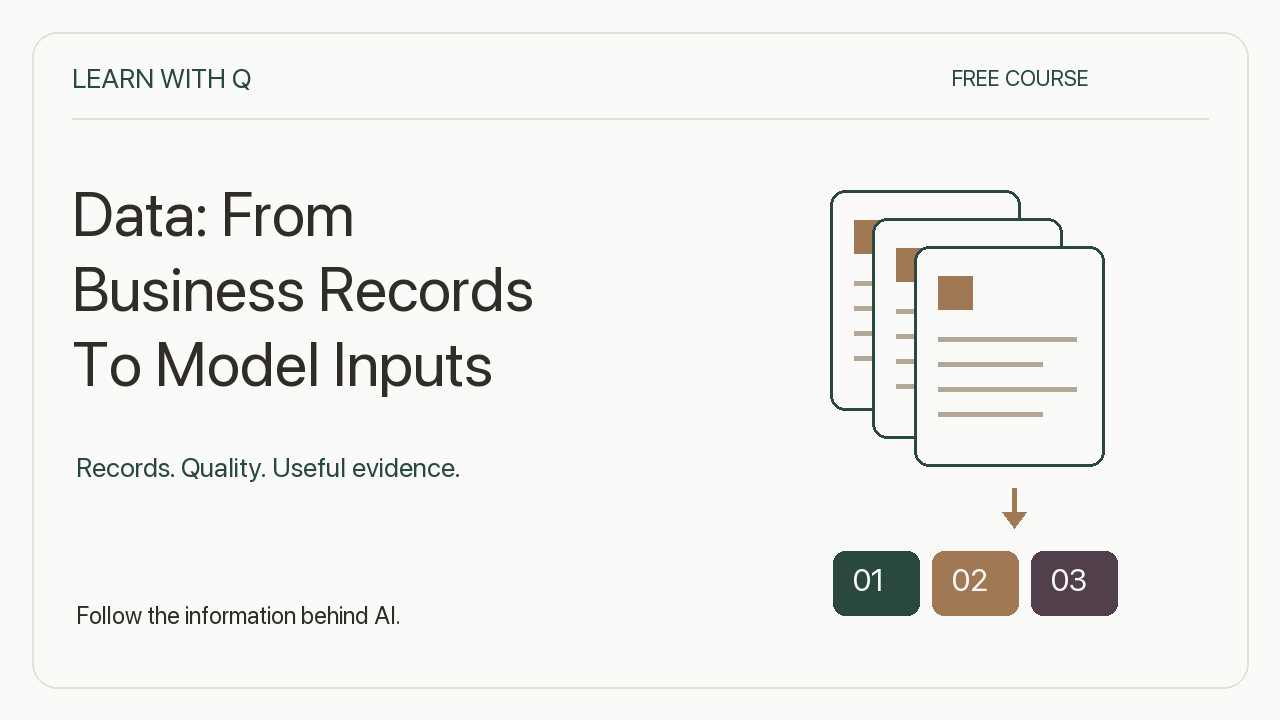 Available
See how business records become information an AI system can use, and why data quality matters.
View Course →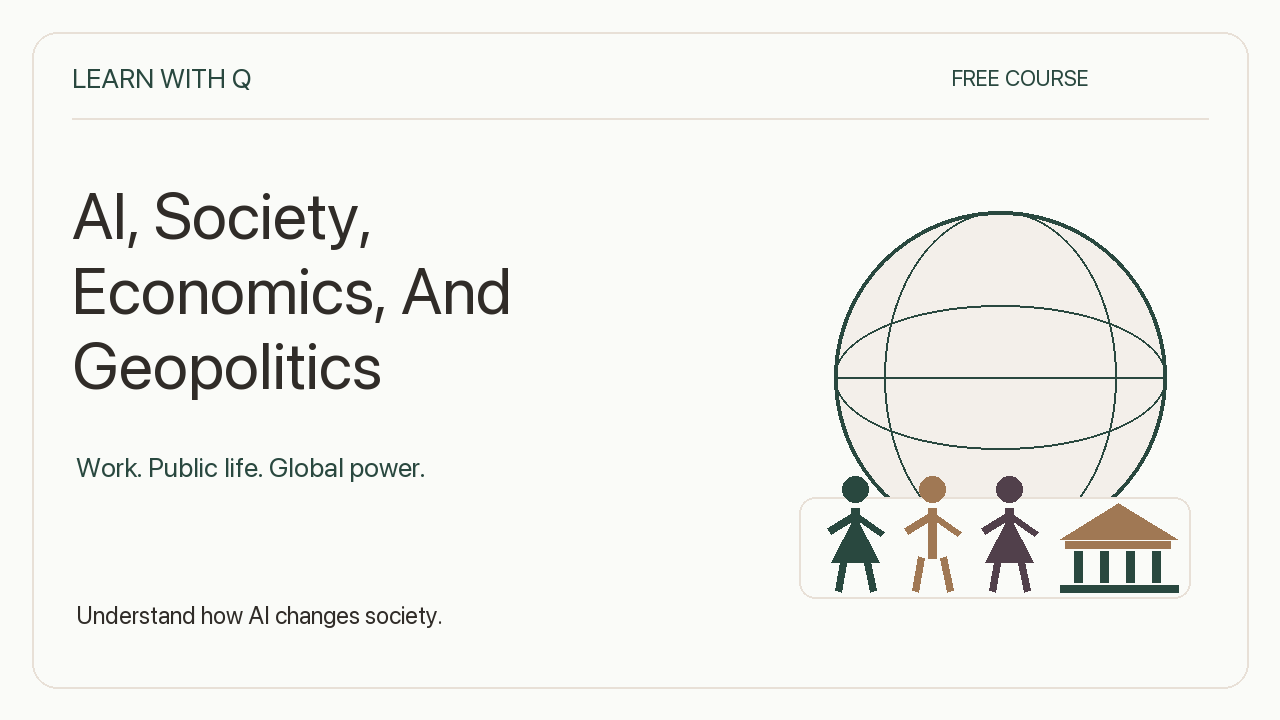 Available
Explore how AI changes work, income, access, public information, education, science and relationships between countries.
View Course →Understand the basics, use AI for everyday tasks and check its work.
Follow the data, learning and testing behind AI answers and predictions.
Understand how AI changes research, explore a scientific field and examine how discoveries become useful.
Connect health, education, climate and food-system applications with evidence, access and public outcomes.
Use shared AI skills in a sector, then plan adoption and the people needed to sustain it.
Explore the chips, electricity and data centres that keep AI running.
Explore how AI changes work, public life and relationships between countries.
Choose useful projects, manage risks and measure results.
Assess how AI companies and infrastructure projects are funded and earn returns.
Turn a useful idea into an AI product people can use and trust.
See how robots and on-device AI interact with people and their surroundings.
Plan AI adoption across teams and countries, with clear responsibilities and safeguards.
Browse all courses by topic and choose your own route.
 Available
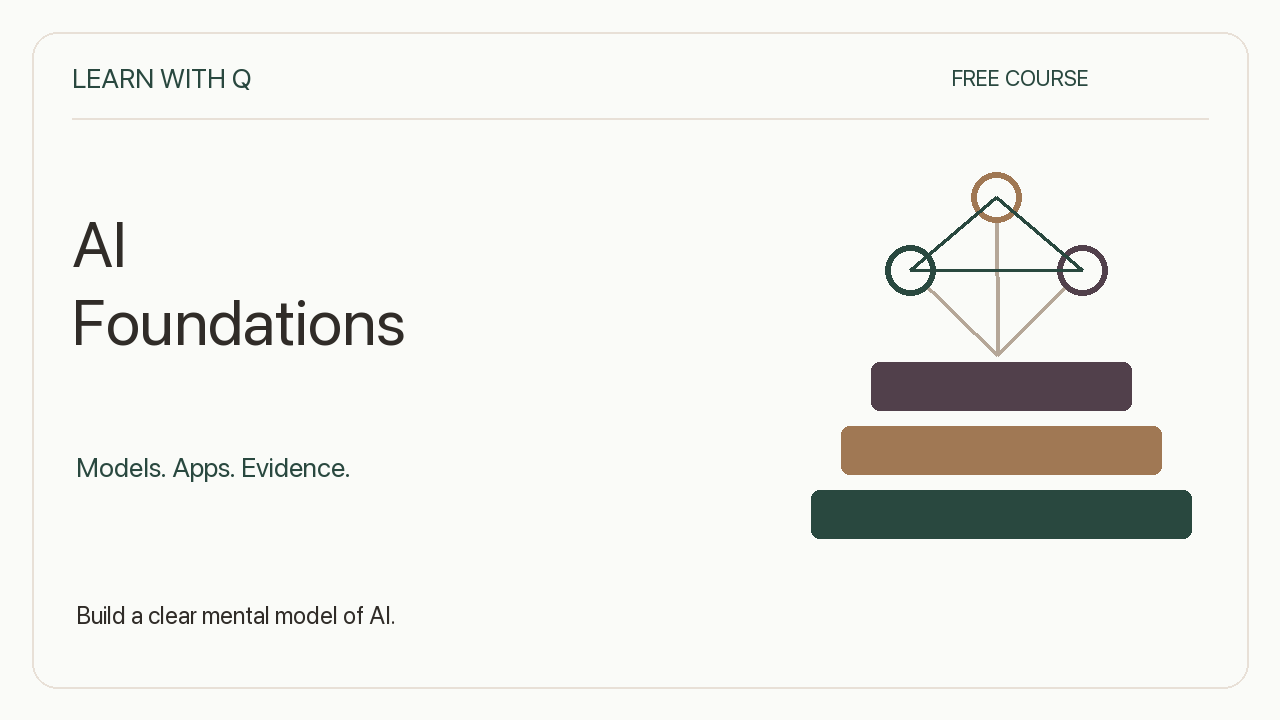
Understand how AI models fit into apps, use data and instructions, and produce answers. Learn to question their evidence, limitations and costs.
View Course →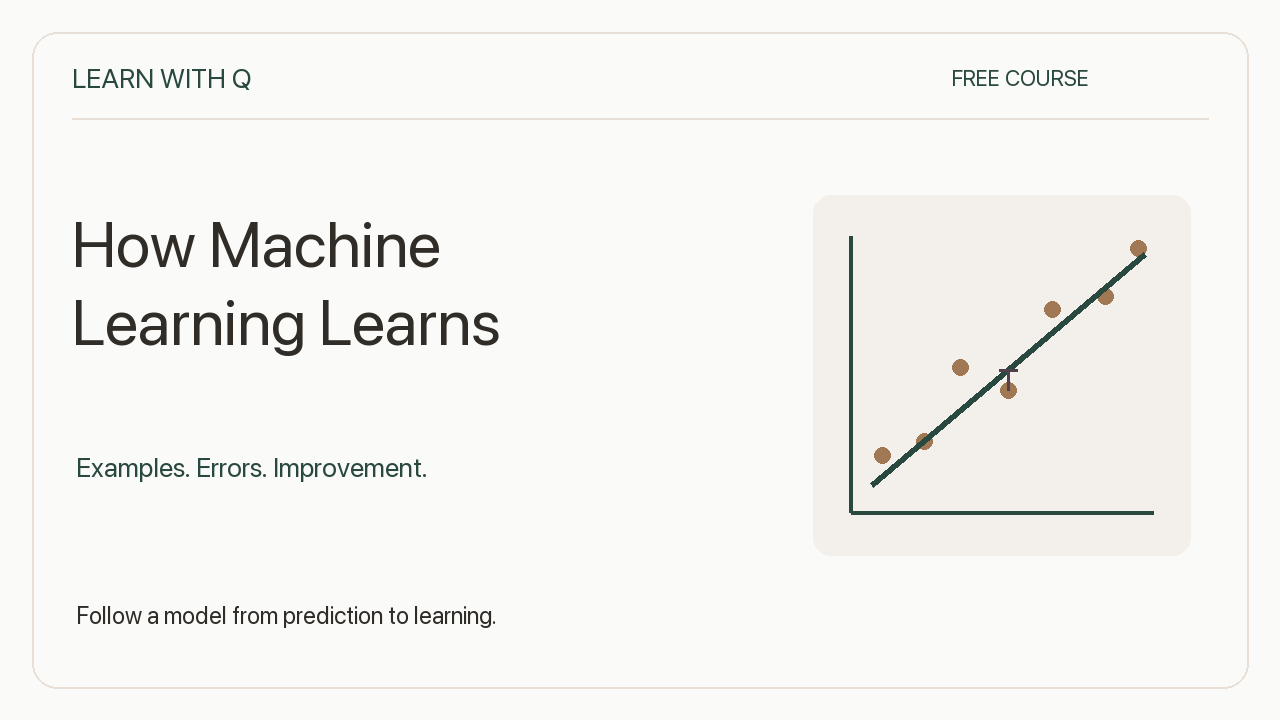 Available
Follow examples through predictions, errors and training, then see how testing helps judge a model’s performance on new data.
View Course → Available
Explore CPUs, GPUs, memory and the work behind AI training and inference. Compare how hardware choices affect speed, capacity and cost.
View Course →AvailableSee how business records become information an AI system can use, and why data quality matters.
View Course →AvailableFollow a question through tokens, learned representations, attention and generation. Learn how to compare models and check their answers.
View Course →AvailableExplore how AI changes work, income, access, public information, education, science and relationships between countries.
View Course → Available
Carry everyday work from a clear request to a checked result: research, documents, spreadsheets, presentations and a practical project.
View Course →7 min 47 sec
How do you decide where AI could help, what to trust, and what you need to understand next? Welcome to the AI Ecosystem Course series from Learn with Q. I'm Queensly Austin. This series connects how AI works with the tasks, products, organizations and wider systems around it. You can begin without a
background in coding or machine learning. We explain technical terms as they become useful. Start with an ordinary task. In this fictional example, a community team wants a short notice for a workshop. Its approved source says the session begins at ten on Friday, with places for twenty people, and registration closes on Wednesday.
The team asks an AI application to turn those public details into a clear notice. No private participant records are needed for this task. The application sends an input to a model and presents its output. The model uses computing resources to generate a draft. Suppose the draft changes the registration deadline to Thursday. Comparing it with the source exposes the error.
The team corrects the deadline, checks the remaining details and decides whether the notice is ready. A fluent draft becomes useful through a complete workflow that includes checking. Behind that small task is a larger ecosystem. Processors carry out calculations. Working memory holds information currently in use, and persistent storage keeps data and models for later.
Power, facilities, software and operations support usable computing. Keep these resources together as you trace how the application and model depend on them. Other relationships matter too. Customers may pay for a service; providers may buy computing capacity. Capital can finance facilities and equipment.
Organizations decide who owns and operates the parts. Governance shapes responsibilities, permitted activities and risk. A diagram helps you follow particular relationships. Its scope always leaves some details outside the picture. The learning paths organize this wider subject around your goals. You might want to use AI in everyday work, evaluate a business decision, understand a model, or explore an application in a particular field.
A path suggests a route through connected courses. You can also open an individual course and choose the depth relevant to your question. The first group brings together practical use, business decisions and investment. Consider the difference between drafting a workshop notice, deciding whether a team should adopt a tool, and assessing how an AI company earns money.
Each question needs a different kind of evidence. Choose the route that helps you examine the decision you actually face. The next routes follow products, models and computing infrastructure. Product study asks how an idea becomes a useful, controlled experience. Model study asks how data, learning and evaluation shape an answer or prediction.
Infrastructure study follows the chips, memory, electricity, software and operations that make the service possible. These views help explain one another. You can also explore society, AI in the physical world, and deployment across organizations and markets. A robot acting near people raises different questions from a tool that drafts a document.
Moving a service across teams or countries can change the data, operating conditions and responsibilities. Follow the connection between the technology and the setting in which it is used. Science, industry and public benefit extend that view. Science asks how an AI prediction becomes a claim researchers can test. Industry applications connect shared AI ideas
with a sector's actual work, from education and health systems to manufacturing and agriculture. Public benefit asks how evidence, access, institutions and delivery affect who benefits. A promising prediction still needs validation and a workable route into use. If you are beginning, start with AI Foundations, then connect those ideas to everyday
tasks in Practical AI For Work. How Machine Learning Learns offers deeper study of learning from examples and evaluating predictions. Compute Fundamentals develops the hardware and memory side when that becomes relevant. You can return to these foundations as a new question creates a reason to go deeper. For a specialist route, begin with the shared
foundations and choose a branch that serves your purpose. Scientific discovery can lead into biology, materials, energy or climate, then into how discoveries reach public benefit. Industry study can lead into a relevant sector and then deployment and team design. These connections help you plan your study without turning the whole catalogue into a compulsory sequence.
A lesson gives you several ways to work with an idea. Use the video and captions, transcript or structured reading. The Main Point states the central conclusion; the teaching and worked example show how it is reached. Practice asks you to apply the idea. A Learning Check asks you to make a decision or explain your reasoning before revealing the answer.
Try that with the workshop notice. Which source detail changed, and what else must you verify before sharing the notice? Pause and make your own check. Resolve the deadline against the source: registration closes on Wednesday. Then check the time, capacity and remaining claims. The important habit is to compare a
draft with evidence and explain any correction. When a lesson provides a worksheet or source material, use the actual material to make your reasoning inspectable. Practice formats vary. AI Foundations and How Machine Learning Learns include scored questions with review suggestions, alongside written self-checks. Compute Fundamentals and Practical AI For Work use written practice and model answers.
Compare your own explanation with the reasoning provided. A self-rating can guide your next attempt, while a correct score is only one piece of evidence about what you understand. Use Learning Paths to choose a goal and All Courses to browse by topic. A Course Overview helps you see what a course covers. In My Learning, return to your notes,
saved lessons and progress, and use Continue Lesson to resume. You can explore as a guest; an optional sign-in lets you synchronize records across devices. Moving this device's guest progress into an account is an explicit choice. Path badges record completion of the required study, including a chosen branch where the path calls for one.
They appear privately in the learner profile. Eligible signed-in learners can choose to share a completion certificate publicly and add its verification details to LinkedIn. These are Learn with Q completion records, including self-assessed written work. They are not accredited qualifications or identity verification. Keep a small learning record as you go:
an ecosystem map, an assumptions ledger, and a log of how changing one part affects others. Before you stop, write one relationship you can explain, one unresolved question, and your next small action. This gives you a useful place to return to. Choose AI Foundations if you want a starting point, or open a learning path connected to your own question. Bring that question into the first example you study.
Work through it, check your reasoning, and use what you learn to decide where to go next.
Curious adults and business professionals who want to understand AI and make informed decisions about it. You can start without coding experience.
AI Foundations starts with the basics and explains new terms. Basic arithmetic is enough to begin. Courses such as Compute Fundamentals go deeper; each course explains its starting knowledge.
AI Foundations, How Machine Learning Learns, Compute Fundamentals, Practical AI For Work and AI, Society, Economics, And Geopolitics are available. Other courses show planned outlines.
Yes. The available videos, readings and practice activities are free.
Start with AI Foundations if you are new to AI. Learning paths suggest an order, but you can open any course or lesson. You do not need to choose a path when creating an account.
Use My Learning to save answers, video positions and study activity. Guests save work in this browser; clearing browser data can remove it. Create an account with your name and an email code to continue across devices. To keep earlier guest work, choose “Add this device’s guest progress” and wait for sync confirmation.
Your dashboard uses saved activity to suggest where to continue and which available course to try next. New learners start with AI Foundations. You can always browse other courses.
AI Foundations and How Machine Learning Learns adjust scored practice using your answers and suggest review. Written explanations are self-checks with model answers. Compute Fundamentals and Practical AI For Work use written practice and Learning Checks. You can revisit the reading at any time.
The new science and industry courses are planned outlines. Their pages explain the intended topics and related courses. Learning paths suggest routes; they do not require you to complete every branch.
Complete the required courses in a learning path and one specialist branch where shown to earn its badge. Optional and supporting study is excluded. Signed-in learners can opt in to a public completion certificate and add its verification link to LinkedIn. These are Learn with Q completion records, not accredited qualifications.